

AC Capacitor Replacement Cost: Is It Worth Fixing or Time for a New System?
Posted 8.13.26

12 Minute Read

AC capacitor replacement typically costs $80 to $400 installed in 2026, and most Alexander City homeowners pay $150 to $250. The part itself runs just $10 to $80. The rest covers the service call, diagnostics, and 30 to 60 minutes of labor. Dual run capacitors and hard start kits sit at the higher end.
Here is what we cover:
- What an AC capacitor does and why it fails
- What AC capacitor replacement cost looks like in 2026
- The 5 factors that affect your final price
- When to repair versus when to replace the whole system
- Signs your capacitor is failing before it quits completely
What Does an AC Capacitor Do?
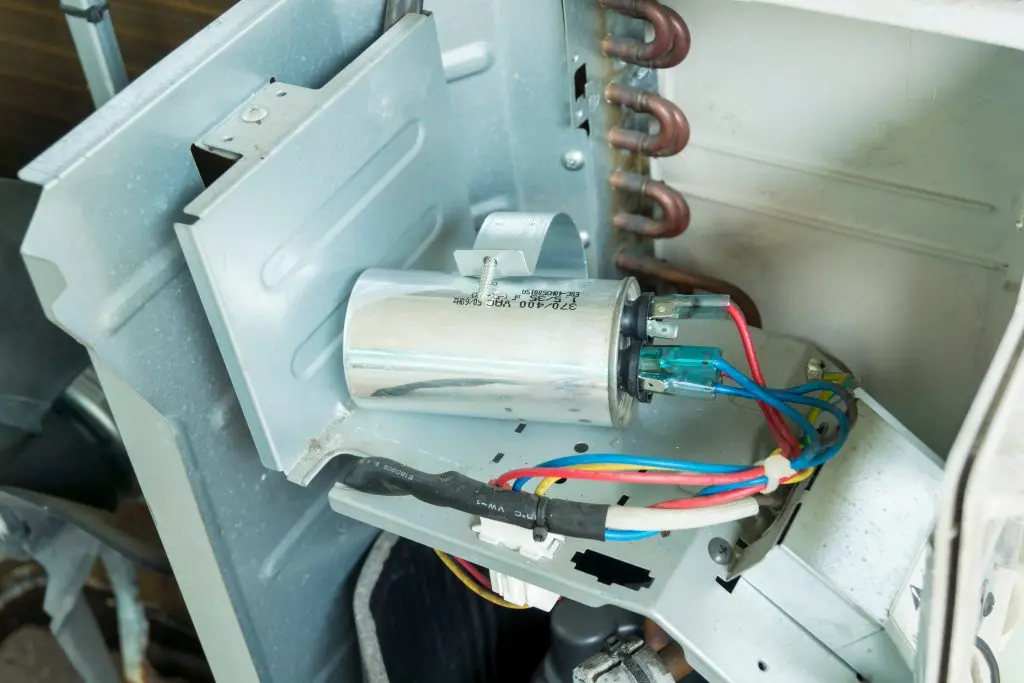
The capacitor is a small cylindrical component inside the AC condenser unit that stores and releases electrical energy. Your air conditioning system needs more electricity to start its motors than the home’s electrical supply can deliver on its own in a single burst. The capacitor bridges that gap. It charges up between cycles and releases electrical energy to help the compressor and fan motors start and run smoothly. Each replacement capacitor is rated to a specific voltage rating and capacitance, and installing one with the wrong voltage rating or microfarad value can damage the system’s electrical components.
Most residential AC units have either a dual run capacitor, which handles both the compressor and condenser fan motor in one unit, or separate start and run capacitors for each component. A blower capacitor is also common in some systems, supporting the indoor air handler blower motor separately from the outdoor unit. When a faulty capacitor weakens or fails entirely, the motors it supports cannot start properly, cannot run consistently, or cannot run at all. A system with a failing capacitor often sounds like it is trying to start, hums loudly, then shuts off without cooling.
According to Energy Star, neglected maintenance can lead to early equipment failure and significantly higher energy costs. Capacitors are particularly vulnerable to heat damage, which is why Alabama’s long, hot air conditioning season accelerates wear on capacitors compared to systems in milder climates. An AC capacitor typically lasts 10 to 20 years, but AC units running hard through Alabama summers may fall closer to the lower end of that range.
Furnace Capacitor Replacement Cost
A furnace capacitor replacement typically costs $100 to $250 installed. In most furnaces, the capacitor powers the blower motor that pushes air through your ducts. That means a failed capacitor can cut off airflow in both winter and summer, since your AC uses the same blower. Some furnaces also have a smaller capacitor on the inducer motor, which vents combustion gases before the burners light.
Newer furnaces with variable-speed (ECM) blower motors don’t use a separate capacitor. If your system has one of those motors and you’re losing airflow, the problem is likely the motor or the control board, and a technician can pinpoint which.
Blower Motor Capacitor Replacement Cost
Replacing a blower motor capacitor usually costs $100 to $250, including the service call and labor. The part itself runs $15 to $45. The blower motor sits in your indoor unit (the furnace or air handler) and moves air through your home. When its capacitor fails, you may hear the outdoor unit running but feel little or no air from the vents.
Common signs of a bad blower capacitor:
- Weak or no airflow from the vents
- A humming sound from the indoor unit while the fan doesn’t spin
- A blower that starts slowly or only after a delay
If the capacitor failed because the blower motor itself is wearing out, your technician will tell you whether the motor needs replacing too. That’s a bigger repair, so it’s worth confirming before you approve the work.
What Does AC Capacitor Replacement Cost in 2026?
AC capacitor replacement cost in 2026 runs between $80 and $400 for most residential systems, with most Alexander City homeowners landing around $150 to $250 for a standard repair. That range includes the replacement capacitor itself, the service call or diagnostic fee, and labor. The capacitor part is inexpensive, typically $10 to $60 depending on type and voltage rating. The majority of the total ac capacitor cost is labor, diagnostic time, and the service call fee.
Here is a breakdown of typical costs by capacitor type:
| Capacitor Type | Part Cost | Typical Installed Cost |
| Run capacitor | $10 to $30 | $80 to $200 |
| Start capacitor | $15 to $45 | $100 to $250 |
| Dual run capacitor | $20 to $60 | $120 to $300 |
| Blower capacitor | $15 to $45 | $100 to $250 |
| Hard start kit | $30 to $80 | $150 to $350 |
Emergency or after-hours service adds $50 to $150 on top of standard pricing. For Alexander City and Lake Martin homeowners who discover a faulty capacitor on a weekend in July, that premium is often worth paying to restore cooling the same day.
5 Factors That Affect AC Capacitor Replacement Cost
The difference between an $80 capacitor job and a $350 one comes down to a handful of specific variables. Here is what moves the price when replacing capacitors.
1. Capacitor Type and Voltage Rating
Not all capacitors are priced the same. A standard run capacitor for a common residential AC unit is one of the least expensive parts in HVAC service. A dual run capacitor, which handles both the compressor and condenser fan motor in one unit, costs more. A blower capacitor for the indoor air handler adds a separate line item when it fails alongside the outdoor capacitor. A hard start kit, which adds a start capacitor and relay to help a struggling compressor get going, costs more still. The voltage rating and microfarad value of the replacement capacitor also affects part cost, with higher-rated units running toward the top of the part price range.
- Run capacitor: The most common replacement, typically $80 to $200 installed.
- Dual run capacitor: Slightly higher AC capacitor cost due to the combined function, typically $120 to $300 installed.
- Blower capacitor: Supports the indoor blower motor, typically $100 to $250 installed.
- Hard start kit: Recommended when the compressor is showing signs of strain, typically $150 to $350 installed.
2. Service Call and Diagnostic Fee
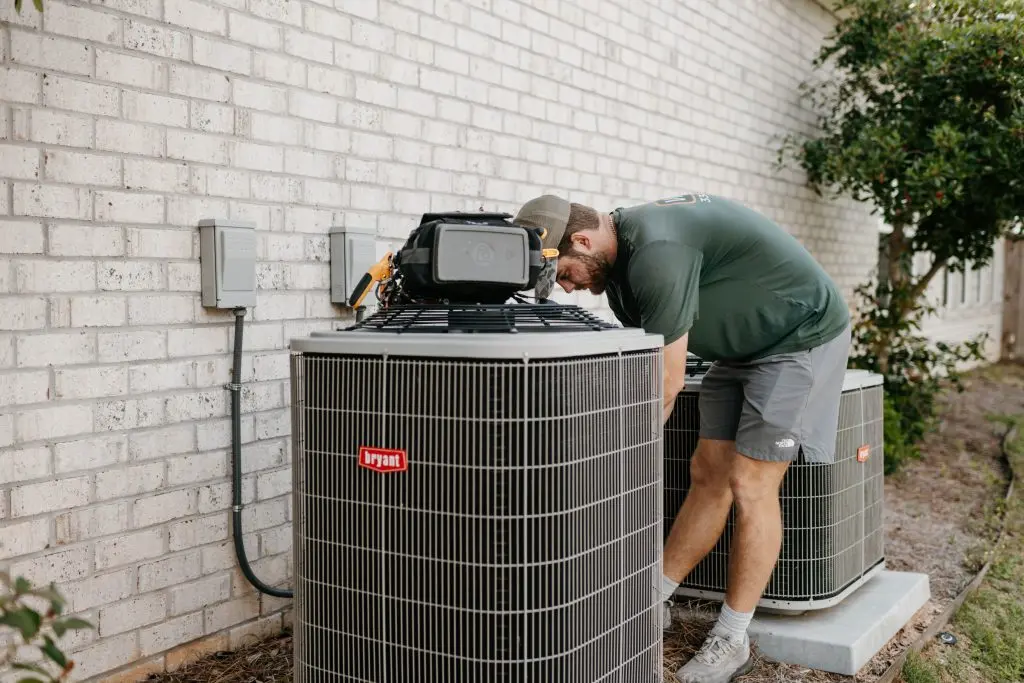
Most HVAC companies charge a service call or diagnostic fee to dispatch a technician and identify the problem. This fee typically runs $75 to $150 and is often credited toward the capacitor replacement cost if you proceed with the fix. At Wingman, pricing is explained before any work starts so you know exactly what the diagnostic and repair will cost before committing.
- Standard hours: Service call fees are typically $75 to $125.
- After-hours and weekend service: Emergency service adds $50 to $150 depending on the contractor and the time of call.
- Fee credit: Most reputable contractors apply the diagnostic fee toward the repair cost if you proceed.
3. Labor Time and System Accessibility
A straightforward capacitor replacement on an accessible AC condenser takes 30 to 60 minutes for a licensed HVAC technician. AC units where the outdoor unit is difficult to access, where multiple electrical components need to be moved to reach the existing capacitor, or where additional testing is required take longer and cost more.
- Standard installation: 30 to 60 minutes, included in the standard service call at most companies.
- Complex access: AC units in tight mechanical spaces, rooftop units, or older systems where electrical components are corroded or difficult to handle add time and cost.
- Additional component failures: If the technician finds a failed contactor, blown fuse, or other faulty capacitor alongside the primary failure, those parts add to the total.
4. Warranty Coverage
If your air conditioning system is within its manufacturer’s parts warranty period, the replacement capacitor itself may be covered at no cost. Most manufacturers offer a 5 to 10 year parts warranty. Trane systems installed by Wingman come with a 10-year manufacturer parts warranty. Within that window, you may pay labor only for replacing capacitors rather than the full part and labor cost.
- In-warranty replacement: Labor and service call only, typically $75 to $175.
- Out-of-warranty replacement: Full part and labor cost, $80 to $350 depending on capacitor type and voltage rating.
- Can’t Pay Wingman warranty: Wingman’s labor and refrigerant warranty covers labor costs for up to 10 years depending on the install tier, which further reduces out-of-pocket costs for covered homeowners.
5. Whether Additional Damage Has Occurred
A faulty capacitor that goes unaddressed does not just fail quietly. A capacitor that has been weakening for a season or more puts added strain on the compressor and fan motors it supports. The compressor has to work harder to start without the full burst of electrical energy, which accelerates compressor wear. If a failing capacitor has been straining the compressor long enough, the technician may find the compressor has been damaged, which turns a $200 AC capacitor cost into a much larger repair or replacement conversation.
This is the most important reason not to delay capacitor replacement. Catching a weak capacitor during a spring tune-up or at the first sign of symptoms costs a fraction of what compressor damage costs to address.
Repa
6 Signs Your AC Capacitor Is Failing
Catching a faulty capacitor early saves money and prevents compressor damage. Here is what to watch for during the air conditioning season.
- The system hums but does not start: The most common sign of a failed start capacitor. The motor is trying to run but cannot generate enough torque without the electrical energy burst from the capacitor.
- The AC unit takes longer than usual to start: A weakening capacitor delivers less electrical energy, causing a delayed or sluggish startup before the system finally gets going.
- The system shuts off shortly after starting: A faulty capacitor that cannot sustain the run cycle causes the system to short cycle, shutting off before the home reaches the set temperature.
- The outdoor fan runs but the compressor does not, or vice versa: Different capacitors support different motors. A failed capacitor for one motor may leave the other running normally, which is a clear sign of which component has failed.
- Visible swelling or leaking on the existing capacitor: A faulty capacitor that has failed catastrophically may show physical damage, including a bulged top or oily residue around the base of the AC condenser unit.
- Higher than normal energy bills with reduced cooling: An AC unit straining against a weak capacitor draws more electricity to accomplish the same air conditioning output, which shows up on the power bill before the system fails completely.
Repair or Replace the System? How to Make the Call
For most homeowners, a faulty capacitor is a straightforward repair decision. The replacement capacitor is inexpensive, the labor is quick, and a system that is otherwise in good condition gets another several years of reliable service from a $150 to $300 fix. However, the calculus changes depending on the age and condition of the air conditioning system.
Here is how to think through the repair versus replace question when a capacitor failure comes up:
- AC unit under 10 years old in good condition: Replace the capacitor every time. It is a normal wear component and replacing capacitors on a young, well-maintained system is the right call without much deliberation.
- AC unit 10 to 15 years old: Apply the $5,000 rule. Multiply the repair cost by the age of the system. If the result is under $5,000, repair. A $200 AC capacitor cost on a 12-year-old system equals $2,400, which points toward repair.
- AC unit over 15 years old with a history of repairs: A faulty capacitor on an aging system that has needed multiple repairs is often the right moment to have an honest replacement conversation rather than put more money into a system that is running out of time.
- System using R-22 refrigerant: Any repair on an R-22 system should be weighed carefully. R-22 is no longer manufactured and recharging it is expensive. If the capacitor failure is accompanied by a refrigerant issue, replacement becomes more financially sensible.
- Capacitor failure with compressor damage: If a slow faulty capacitor has already caused compressor damage, the repair cost jumps dramatically. At that point, replacement is often the smarter investment.
We are proud to serve homeowners in Alexander City, AL and nearby Lake Martin communities with honest AC repair and replacement guidance and more, so you always get a straight answer on which direction makes the most sense before any money gets spent.
Common Questions About AC Capacitor Replacement Cost
These are the questions Alexander City homeowners ask most often when dealing with a capacitor issue.
Can I replace an AC capacitor myself?
Technically yes, but it is not recommended. Capacitors hold a high-voltage charge even when the air conditioning system is turned off, and handling them without proper discharge procedures creates a serious shock risk. The voltage rating and microfarad value of the replacement capacitor must also match the existing capacitor exactly. Professional replacement is the right call both for safety and to ensure the correct replacement capacitor is installed to the correct specifications.
How long does capacitor replacement take?
A standard capacitor replacement takes 30 to 60 minutes for a licensed HVAC technician. The technician discharges the existing capacitor safely, removes it, installs the replacement capacitor, and tests the air conditioning system before leaving. Most capacitor replacements are completed in a single service call.
How long does a new capacitor last?
A replacement capacitor in a well-maintained system typically lasts 10 to 20 years. In Alabama’s climate, where AC units run hard from May through September, expect the lower end of that range without consistent maintenance. Annual spring tune-ups catch weak capacitors before they fail completely and before they damage the compressor.
Will a bad capacitor damage my compressor?
Yes, over time. A faulty capacitor forces the compressor to work harder on startup and during the run cycle, which accelerates wear on compressor windings. A capacitor that goes unaddressed long enough can cause compressor failure, which is a much more expensive repair than replacing capacitors at the first sign of weakness. Catching the issue early is the most cost-effective path.
Does Wingman’s Wingman Pack cover capacitor replacements?
Wingman Pack members receive 10% off all repairs, Wingman Fast Pass priority scheduling, and no overtime fees. Replacing capacitors qualifies for the repair discount, which reduces the out-of-pocket ac capacitor cost and gets members to the front of the schedule during the busy summer season when faulty capacitors peak.
Let Wingman Diagnose It and Tell You the Truth
A faulty capacitor is often a quick, affordable fix, but only when it gets caught and addressed before it damages the compressor or other electrical components. Wingman Heating + Cooling shows up same day on most calls, diagnoses the problem accurately, and walks you through the ac capacitor cost and the system’s overall condition before any work starts. No pressure, no upselling, no surprises on the invoice. Contact our team to schedule your diagnostic and get a straight answer on what your air conditioning system actually needs.
